 AXIOM
AXIOM
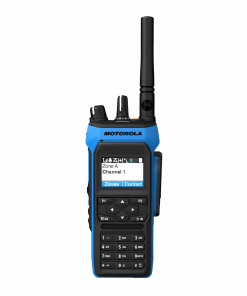
Motorola APX N50 – Mission-Critical P25 Communications
Secure. Reliable. Ready for the Mission.
Purpose-built for public safety, government and critical operations.

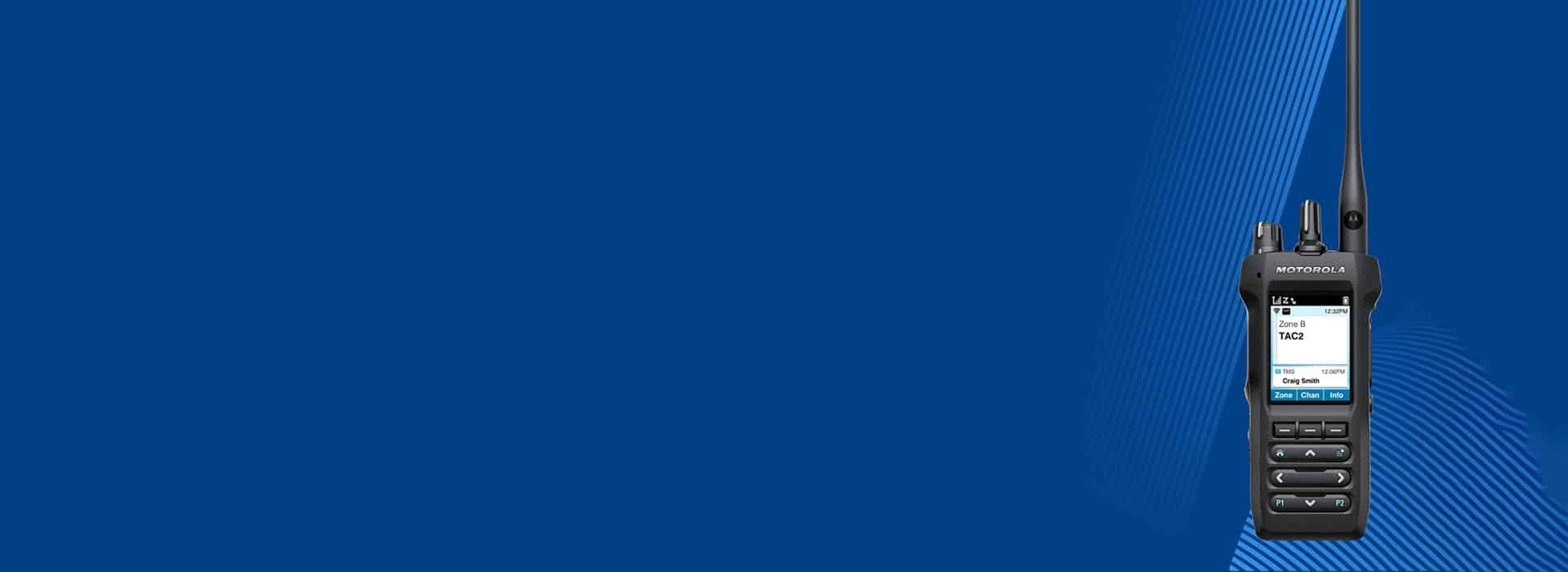
Secure. Reliable. Ready for the Mission.
Purpose-built for public safety, government and critical operations.
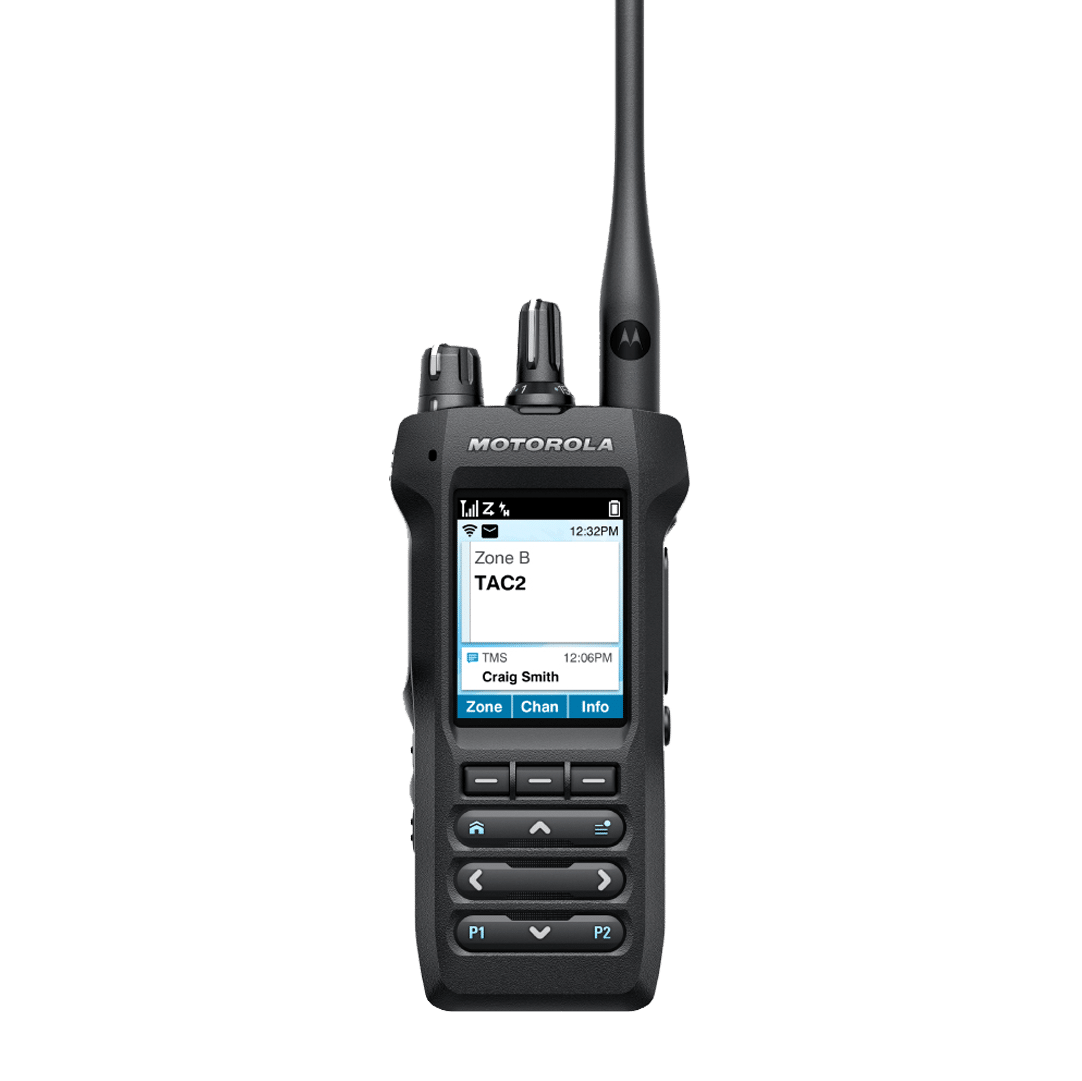
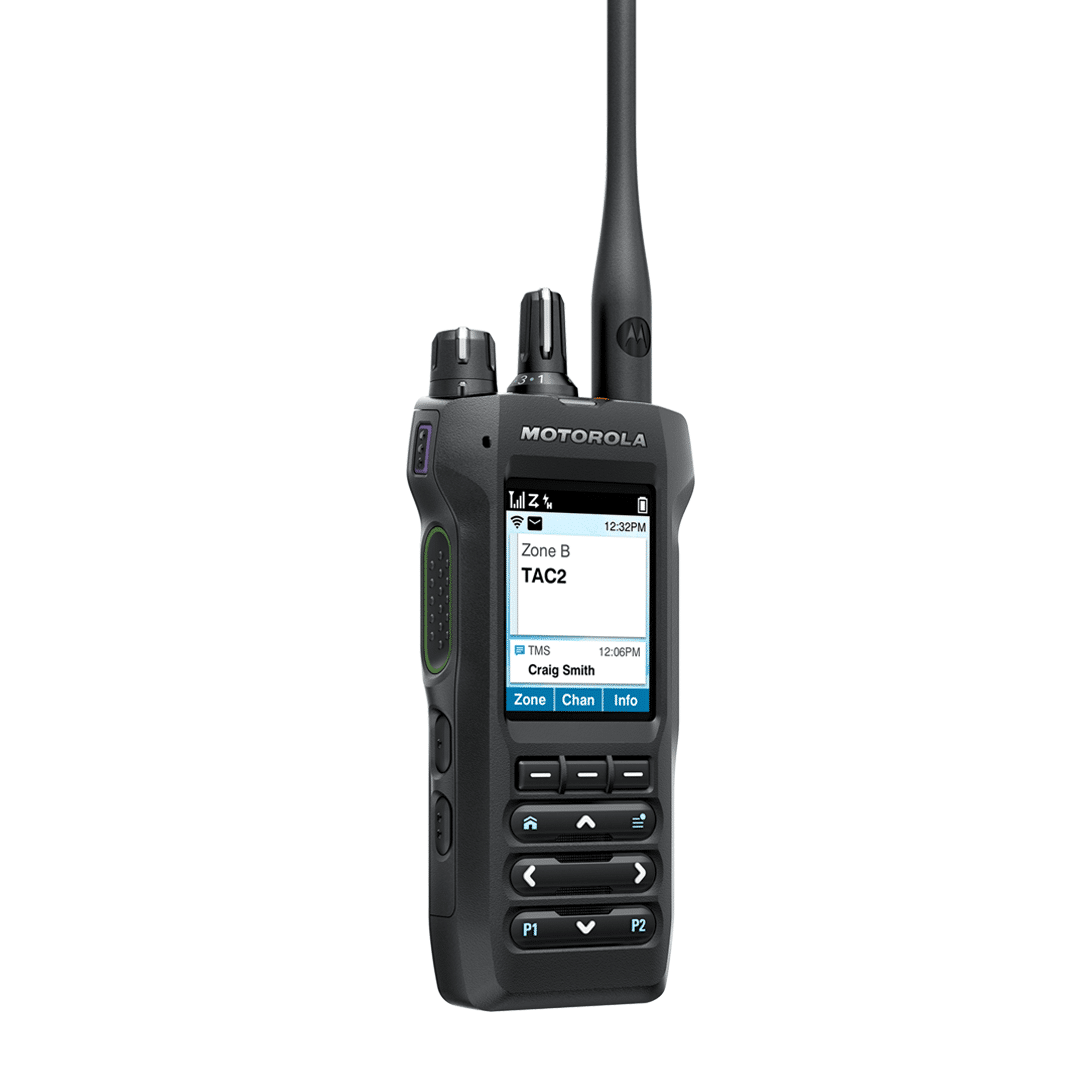
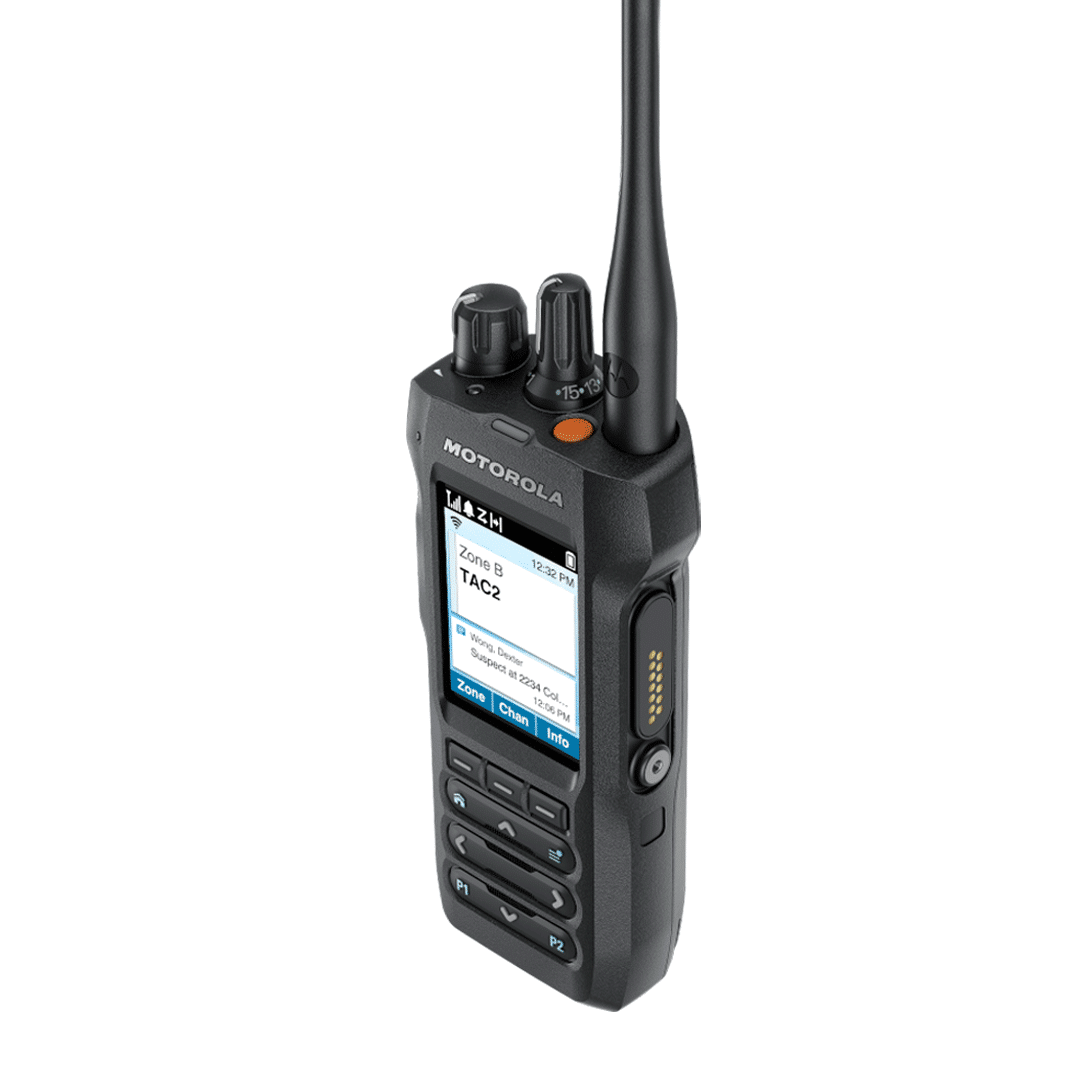
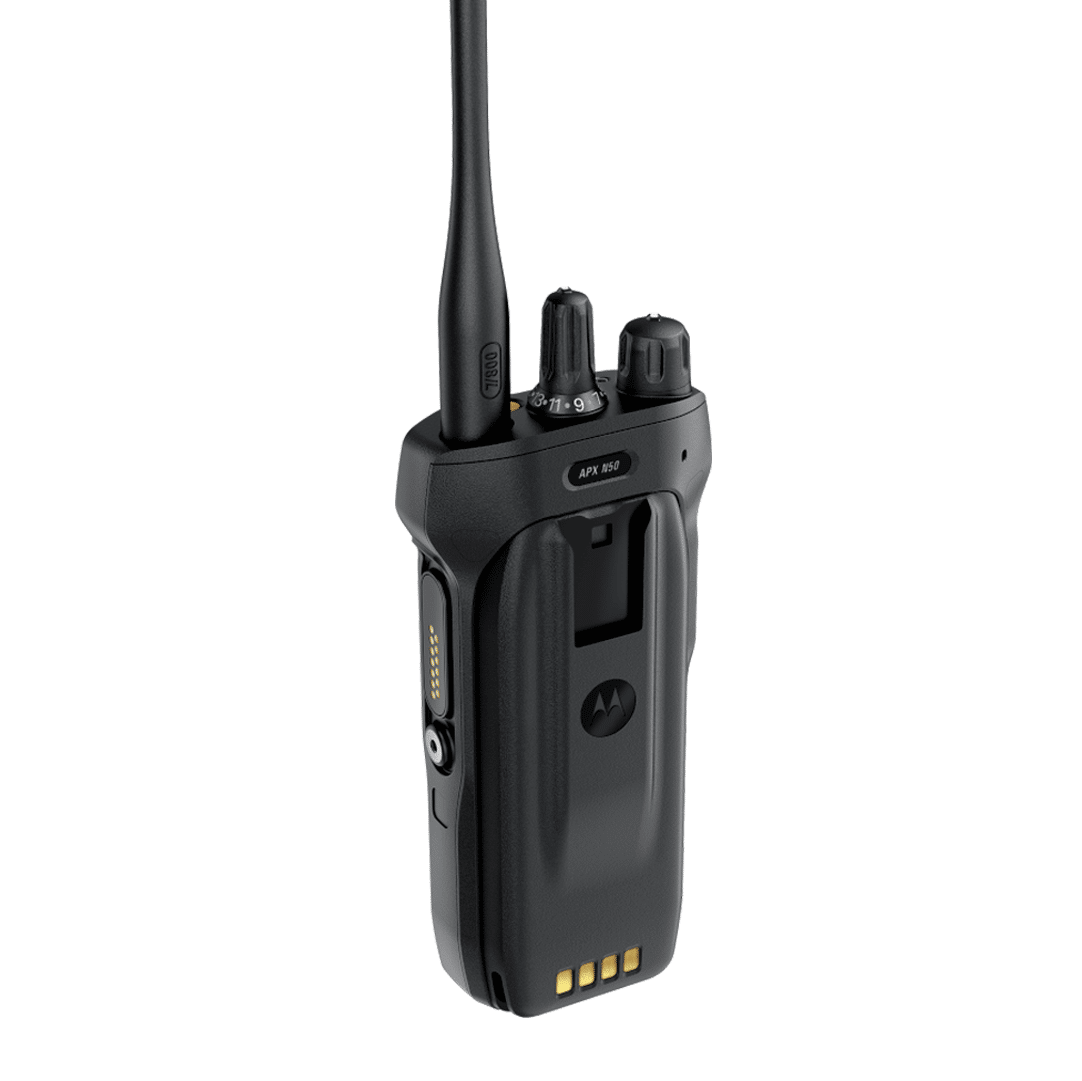
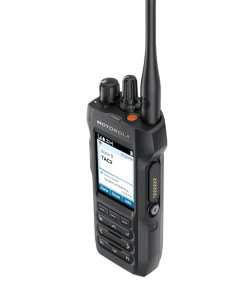
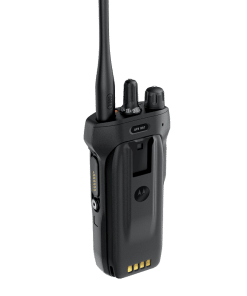
The Motorola APX N50 is a rugged, lightweight, single-band P25 Phase 1 and Phase 2 portable two-way radio designed for reliable, secure communications across public safety, government, emergency services and critical infrastructure operations.
Combining advanced noise suppression, a 2.4-inch colour display and intuitive controls, the APX N50 delivers clear communications in demanding operational environments. With IP68 protection, integrated GPS/GLONASS and support for P25 conventional and trunked networks, it provides a versatile solution for organisations requiring dependable digital radio communications.
Key Features:
Available from MiningTelecoms Australia. Contact our team for APX N50 pricing, availability and configuration advice. Quotations are tailored to your required frequency band, P25 network compatibility, software features, enhancement keys and accessories.
The Motorola APX N50 is a rugged, single-band P25 portable two-way radio engineered for public safety, government agencies, emergency responders and organisations operating critical communications networks. Combining dependable voice communications with a compact, lightweight design, the APX N50 helps personnel remain connected in demanding operational environments.
Designed to support APCO P25 Phase 1 FDMA and Phase 2 TDMA, the APX N50 provides digital voice communications across compatible P25 conventional and trunked radio networks. Advanced audio processing and noise suppression help maintain clear, intelligible speech in challenging environments, while the 2.4-inch colour display and intuitive controls simplify everyday operation.
Available in VHF, UHF and 700/800 MHz single-band configurations, the Motorola APX N50 combines IP68 environmental protection, integrated location services and optional advanced security capabilities. Features such as AES-256 encryption, Wi-Fi connectivity and supported software enhancements can be configured according to the organisation’s operational and network requirements.
MiningTelecoms Australia supplies Motorola APX N50 P25 portable radios to Australian government, public safety, utilities, mining and critical infrastructure customers. Our team can assist with selecting the appropriate frequency band, evaluating P25 network compatibility, identifying required software features and enhancement keys, and preparing a tailored quotation for your communications requirements.

The 2.4-inch colour display provides clear visual information, intuitive navigation and convenient access to radio functions.

Designed for demanding environments, with IP68 dust and water protection rated for submersion up to 2 metres for 2 hours.

Motorola IMPRES 2 battery technology provides intelligent battery management to support demanding operational shifts.

Advanced audio processing and noise suppression help deliver clear, intelligible voice communications in challenging environments.

Supports APCO P25 Phase 1 FDMA and Phase 2 TDMA operation across compatible conventional and trunked radio networks.

Bluetooth connectivity and optional Wi-Fi capabilities support compatible accessories and selected software applications.

Optional AES-256 encryption and supported security features help protect sensitive communications, subject to configuration and network requirements.
When communications are essential to operational safety, missed calls, unclear instructions or unreliable network access can have serious consequences. The Motorola APX N50 is designed to support dependable P25 voice communications for personnel working in demanding public safety, government and critical infrastructure environments.
With advanced audio processing, rugged IP68 construction and support for P25 Phase 1 and Phase 2 operation, the APX N50 helps teams maintain clear, reliable communications across compatible conventional and trunked radio networks.
For organisations operating existing P25 systems, selecting the correct frequency band, software features, encryption options and network configuration is essential. MiningTelecoms Australia can assist customers in identifying the appropriate APX N50 configuration for their operational requirements.
Clear voice communications are essential when personnel are operating in high-pressure or noisy environments. The Motorola APX N50 incorporates advanced audio processing and noise suppression technologies designed to improve speech intelligibility and reduce distracting background noise.
Whether communicating from vehicles, industrial facilities or busy operational locations, the APX N50 helps personnel hear and understand important radio messages.
The Motorola APX N50 supports APCO P25 Phase 1 FDMA and Phase 2 TDMA digital radio communications, making it suitable for compatible P25 conventional and trunked networks.
Available in VHF, UHF and 700/800 MHz single-band configurations, the APX N50 can be specified to meet the operating frequency and technical requirements of an organisation’s existing P25 communications infrastructure.
Network compatibility, feature licensing and system authorisation must be confirmed before deployment.
The Motorola APX N50 offers optional AES-256 encryption to help protect sensitive voice communications across appropriately configured P25 networks.
Security features, encryption keys and software enhancements must be selected according to the customer’s operational requirements and the capabilities of the existing network.
MiningTelecoms Australia can assist customers in identifying suitable radio configurations and required feature options when preparing an APX N50 quotation.
The Motorola APX N50 is engineered for reliable communications in challenging operational environments. Designed for public safety, government, utilities and critical infrastructure personnel, its rugged construction helps protect the radio against dust, water, vibration and the everyday demands of field operations.
With an IP68 environmental protection rating, the APX N50 is designed to withstand dust exposure and temporary submersion in water to a depth of 2 metres for up to 2 hours. This makes it suitable for personnel working outdoors, in wet conditions and in environments where communications equipment is exposed to the elements.
The APX N50 is designed and tested against applicable MIL-STD-810 environmental methods, addressing conditions such as shock, vibration and temperature extremes. Its compact construction and intuitive controls support dependable everyday use without unnecessary bulk.
For organisations operating P25 communications networks across multiple locations, selecting durable portable radios is essential to maintaining operational readiness. MiningTelecoms Australia can assist customers in identifying the appropriate APX N50 frequency band, software configuration and accessories for their operating environment.
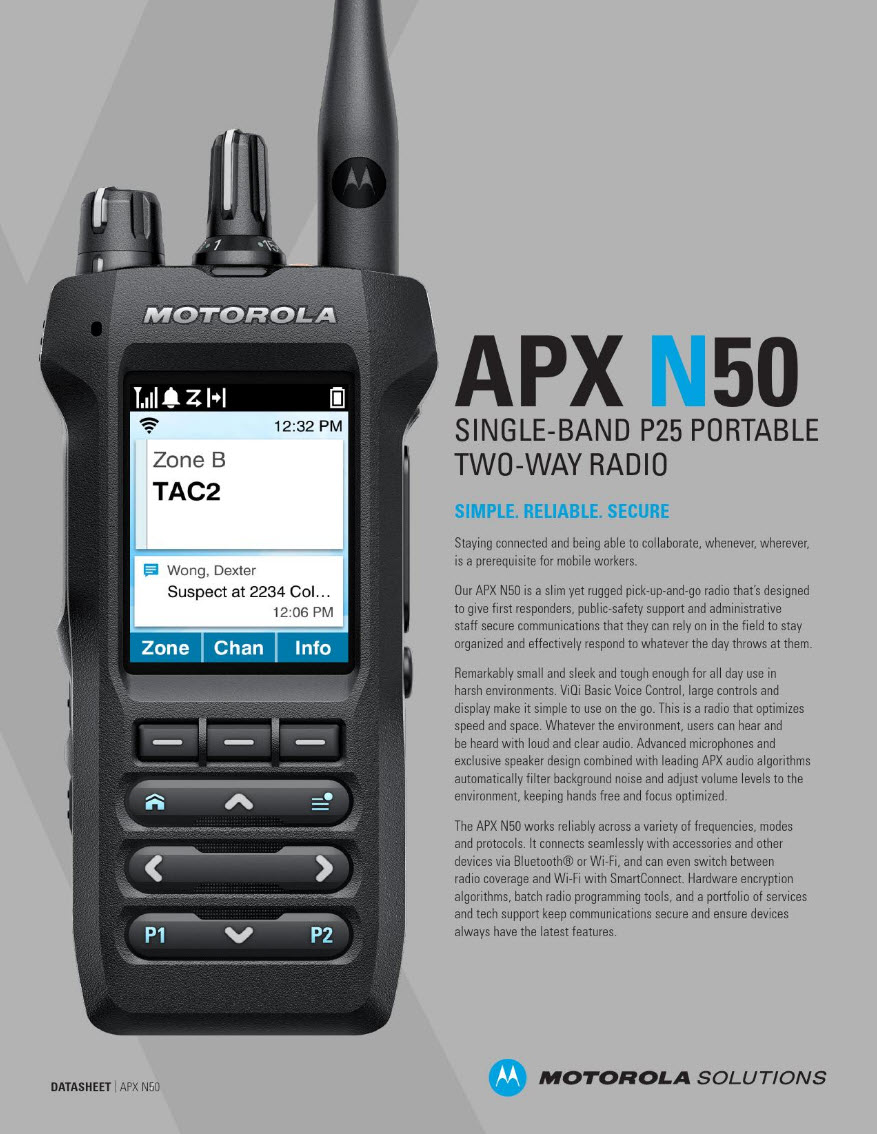
The Motorola APX N50 is designed to support dependable voice communications across compatible APCO P25 conventional and trunked radio networks. Whether deployed across a single operational site or an established multi-site P25 system, the APX N50 provides organisations with a flexible portable radio solution for mission-critical communications.
The APX N50 supports APCO P25 Phase 1 FDMA and Phase 2 TDMA digital voice communications. This enables operation across compatible P25 networks, with Phase 2 technology supporting more efficient use of available radio channels where the network infrastructure is appropriately configured.
The Motorola APX N50 supports P25 conventional operation and compatible ASTRO 25 trunked radio systems. Available in VHF, UHF and 700/800 MHz single-band variants, the radio can be specified to meet the frequency and network requirements of an organisation’s existing communications infrastructure.
Bluetooth connectivity supports compatible wireless accessories, while optional dual-band Wi-Fi provides additional connectivity for supported radio-management and software applications. Availability of Wi-Fi-based features, including SmartConnect, depends on the radio configuration, software licences and network infrastructure.
Integrated GPS and GLONASS capabilities support location-aware applications where enabled and supported by the communications system. Optional software enhancements can provide additional operational capabilities, helping organisations improve personnel awareness and coordinate field activities.
MiningTelecoms Australia can assist government agencies, public safety organisations, utilities and critical infrastructure operators with APX N50 radio selection, frequency-band requirements, P25 network compatibility and applicable software feature licences. Network access and provisioning must be authorised by the relevant system operator.
Reliable radio communications are essential when personnel are responding to emergencies, working in remote locations or undertaking safety-critical operations. The Motorola APX N50 supports emergency communications capabilities designed to assist personnel operating across compatible P25 radio networks.
When correctly programmed and supported by the network, emergency signalling can help prioritise critical communications and alert dispatch personnel to situations requiring immediate attention.
Emergency Communications
The APX N50 provides programmable emergency functions that can be configured according to an organisation’s operational procedures and P25 network capabilities.
Additional safety and location-based capabilities may be available through optional software features, allowing organisations to tailor the radio to specific operational requirements.
The Motorola APX N50 is designed for organisations requiring dependable, secure and mission-critical voice communications. Supporting APCO P25 Phase 1 and Phase 2 operation, the APX N50 is suited to public safety agencies, government departments and critical infrastructure operators using compatible conventional or trunked P25 networks.
MiningTelecoms Australia can assist organisations with selecting the appropriate frequency band, evaluating existing P25 network compatibility and identifying the software features, security options and accessories required for their operations.
The APX N50 supports police, fire, emergency response and other public safety personnel requiring reliable P25 voice communications. Emergency signalling, rugged construction and optional encryption help support coordinated operations across compatible radio networks.
Government departments and authorised defence-support organisations can use the APX N50 for secure, coordinated communications. P25 interoperability, optional AES-256 encryption and configurable software features help meet specific operational and network requirements.
Mining operations using P25 radio infrastructure can deploy the APX N50 for communications between supervisors, emergency response teams and field personnel. Rugged IP68 construction and advanced audio processing support demanding operational environments.
Electricity, water, gas and telecommunications operators can use the APX N50 to coordinate field crews, maintenance activities and incident response across compatible P25 networks, helping maintain communications during essential infrastructure operations.
Airports, transport authorities and infrastructure operators using P25 systems can deploy the APX N50 for coordinated operational communications. Integrated location capabilities and configurable emergency functions can support personnel working across large facilities.
Industrial facilities, processing plants and specialist emergency response teams operating P25 networks can benefit from the APX N50’s rugged construction, clear audio and configurable safety capabilities in demanding working conditions.
Organisations operating existing P25 networks must confirm frequency compatibility, network authorisation, software licensing and encryption requirements before deploying new radios. Where operations involve potentially explosive atmospheres, the appropriate hazardous-location approvals and approved battery configuration must also be verified. MiningTelecoms Australia can assist customers in identifying suitable APX N50 configurations for their operational environment.
The following answers cover common questions about Motorola APX N50 models, frequencies, battery performance, P25 compatibility, hazardous-area use and professional programming.
The Motorola APX N50 is a rugged, single-band APCO P25 portable two-way radio designed for public safety, government, utilities and critical infrastructure communications. It supports P25 Phase 1 and Phase 2 digital operation across compatible conventional and trunked radio networks, with advanced audio processing, IP68 environmental protection and configurable security features.
Yes. The Motorola APX N50 supports APCO P25 Phase 1 FDMA and Phase 2 TDMA digital radio communications. This allows the radio to operate on compatible P25 conventional and trunked systems, subject to the radio’s configuration, software features and network requirements.
The Motorola APX N50 can operate on compatible P25 conventional and trunked networks, including appropriately configured Motorola ASTRO 25 systems. Before deployment, organisations must confirm the operating frequency band, network compatibility, required software features and authorisation from the network operator. MiningTelecoms Australia can assist with assessing these requirements.
The Motorola APX N50 is available in VHF (136–174 MHz), UHF (380–520 MHz) and 700/800 MHz single-band configurations. Each radio operates within its specified frequency-band variant rather than across all bands. The correct model must be selected to match the customer’s licensed frequencies and P25 network infrastructure.
Yes. AES-256 encryption is available as an optional security capability on appropriately configured Motorola APX N50 radios. Encryption functionality may require specific software options, key management and compatible network configuration. MiningTelecoms Australia can assist customers in identifying the encryption requirements for their intended P25 system.
The Motorola APX N50 provides IP68 environmental protection, including dust protection and immersion resistance tested to a depth of 2 metres for 2 hours. The radio is also designed and tested against applicable MIL-STD-810 environmental methods, making it suitable for demanding field operations. Hazardous-location suitability requires the appropriate approved configuration and battery.
The Motorola APX N50 supports integrated GPS and GLONASS location services and Bluetooth connectivity for compatible accessories. Optional Wi-Fi functionality is available for supported applications and software features. The availability of specific wireless capabilities depends on the radio configuration, applicable licences and network infrastructure.
MiningTelecoms Australia can assist customers with APX N50 configuration requirements, including frequency selection, channel and talk group planning, software feature options and compatibility with existing P25 systems. Programming, encryption provisioning and trunked network access depend on the necessary software, system information, permissions and authorisation from the relevant network operator.
The Motorola APX N50 is designed for APCO P25 digital communications, commonly used by public safety agencies, government departments and critical infrastructure operators. Motorola MOTOTRBO radios, such as the Motorola R7, use DMR digital radio technology. P25 and DMR are different radio standards, so an APX N50 cannot be assumed to operate on MOTOTRBO Capacity Plus or Capacity Max networks.
MiningTelecoms Australia supplies Motorola APX N50 P25 portable two-way radios to Australian government, public safety, mining, utilities and critical infrastructure customers. Pricing is provided by quotation because the final configuration may depend on frequency band, software feature licences, encryption options, batteries and accessories. Contact MiningTelecoms Australia to discuss availability and request a tailored quotation.
MiningTelecoms Australia supplies Motorola APX N50 P25 portable two-way radios for government, public safety, mining, utilities and critical infrastructure organisations across Australia. We can assist with selecting the correct frequency band, assessing compatibility with existing P25 conventional or trunked networks, and identifying the software licences, encryption options and accessories required for your operations.
Whether you need additional radios for an existing P25 network or are planning a new deployment, our team can help you determine the appropriate APX N50 configuration and prepare a tailored quotation. Radio programming and network provisioning can be coordinated subject to the necessary system information, software access and network operator authorisation.
The Motorola APX N50 is available in VHF, UHF and 700/800 MHz single-band configurations to support different operational and P25 network requirements. Selecting the correct radio involves more than choosing a frequency band. Organisations must also consider their existing P25 infrastructure, conventional or trunked operation, encryption requirements and any optional software features.
MiningTelecoms Australia can assist customers in identifying the appropriate APX N50 configuration for their communications environment.
The VHF configuration supports operation across the 136–174 MHz frequency range. It is suitable for organisations using compatible VHF P25 conventional or trunked radio infrastructure, subject to system configuration and network authorisation.
The UHF configuration operates across the 380–520 MHz frequency range and is designed for organisations using compatible UHF P25 communications systems. The appropriate frequency allocation and network configuration must be confirmed before deployment.
The 700/800 MHz configuration is designed for compatible P25 radio systems operating within supported 700 MHz and 800 MHz frequency allocations. It may be suitable for authorised public safety and government networks where the APX N50 is supported.
The Motorola APX N50 is a single-band radio, meaning the selected model must match the frequency requirements of the intended P25 communications system. Additional capabilities, including encryption, Wi-Fi connectivity and supported software enhancements, may require specific feature licences or configurations.
MiningTelecoms Australia can assist organisations in evaluating APX N50 frequency-band options, confirming network compatibility and preparing a quotation based on their operational requirements.
The Motorola APX N50 is available with different frequency-band, battery, accessory and software feature configurations. Selecting the correct combination is essential for compatibility with an organisation’s existing P25 conventional or trunked radio network.
MiningTelecoms Australia can assist customers with identifying suitable radio configurations, evaluating network requirements and coordinating programming and deployment arrangements, subject to the necessary system access and authorisations.
The Motorola APX N50 is available in three single-band configurations:
The selected radio and antenna must match the organisation’s licensed frequencies and existing communications infrastructure.
Before selecting an APX N50, confirm the intended radio system and network requirements:
Compatibility with an existing P25 network must be confirmed before ordering. Access to mining, third-party or government networks requires authorisation from the relevant system operator.
Motorola IMPRES 2 battery technology supports intelligent battery management for demanding operational environments.
Available battery options include:
MiningTelecoms Australia can assist with selecting suitable battery capacity and charging arrangements based on shift duration, operating conditions and fleet size.
Not sure which N50 configuration to order? Provide MiningTelecoms with your existing radio model, frequencies, system type, operating environment and required quantity. We can recommend the appropriate radio, battery, antenna, charger and audio accessories.
The Motorola APX N50 supports a range of compatible Motorola accessories, depending on the selected radio configuration.
Accessory options may include:
Accessory selection should consider workplace noise, operational safety, user comfort and how the radio will be carried during daily operations.
The Motorola APX N50 offers configurable capabilities to support different operational and network requirements.
Depending on the selected configuration and available software features, options may include:
Some capabilities require additional software licences, encryption provisioning or compatible network infrastructure. Feature availability should be confirmed when preparing the quotation.
MiningTelecoms Australia can assist with defining APX N50 programming and deployment requirements, including:
Programming and provisioning are subject to the necessary Motorola software, network information, feature licences and approval from the relevant P25 system operator.
The Motorola APX N50 is a rugged, single-band APCO P25 portable two-way radio designed for public safety, government and mission-critical communications. Supporting P25 Phase 1 FDMA and Phase 2 TDMA, the APX N50 combines advanced audio processing, secure communications options and IP68 environmental protection in a compact portable design.
Specifications vary according to the selected VHF, UHF or 700/800 MHz model, battery configuration and enabled software features.
| Specification | Motorola APX N50 |
|---|---|
| Frequency bands | VHF: 136–174 MHz; UHF: 380–520 MHz; 700/800 MHz variants |
| RF output power | VHF/UHF: up to 5 W; 700 MHz: up to 2.5 W; 800 MHz: up to 3 W |
| Channel capacity | Up to 1,000 channels and 65 zones |
| Channel spacing | 12.5 kHz and 25 kHz, subject to band and operating mode |
| Operating modes | P25 digital and supported analogue conventional modes |
| Digital protocol | APCO P25 Phase 1 FDMA and Phase 2 TDMA |
| Display | 2.4-inch TFT colour display, 240 × 320 pixels |
| Audio performance | Advanced audio processing and noise suppression |
| Speaker | High-output speaker; up to 3 W audio output as specified by Motorola |
| Wi-Fi | Optional 802.11a/b/g/n/ac, 2.4 GHz and 5 GHz |
| Bluetooth | Bluetooth 4.2 Low Energy |
| Location services | GPS and GLONASS |
| Radio systems | P25 conventional and compatible ASTRO 25 trunked systems |
| Water and dust protection | IP68 — IP6X dust protection and IPX8 immersion, 2 m for 2 hours |
| Ruggedness | Tested against applicable MIL-STD-810 environmental methods |
| Operating temperature | −30°C to +60°C |
| Dimensions | Approximately 135 × 55 × 33 mm |
| Weight | Approximately 370 g with standard battery, excluding antenna |
| Battery technology | Motorola IMPRES 2 rechargeable lithium-ion |
| Standard battery | 2850 mAh IMPRES 2 |
| Optional battery | 3200 mAh HAZLOC battery, subject to approved configuration |
| Safety features | Emergency signalling; optional Man Down and supported location-based features |
| Encryption | Optional AES-256, subject to configuration and licensing |
Motorola APX N50 specifications and features may vary according to frequency band, battery, regional availability, software licences and P25 network configuration. Optional capabilities, including AES-256 encryption, Wi-Fi connectivity and advanced safety functions, may require additional feature entitlements or compatible infrastructure.
MiningTelecoms Australia can assist customers in selecting the appropriate APX N50 configuration and confirming compatibility with their existing P25 communications network before ordering.
Designed to deliver Xtreme voice clarity. Selectable audio profiles
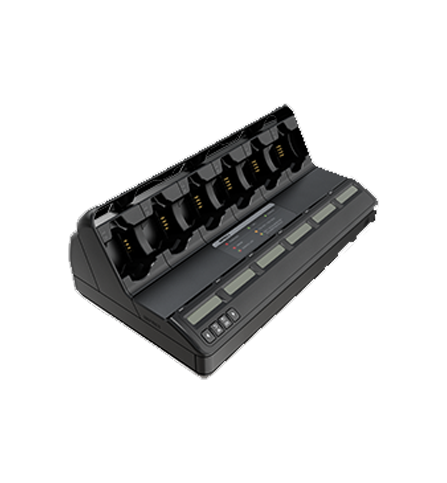
Intelligent charging unit. Allows for up to 6 units at one time.
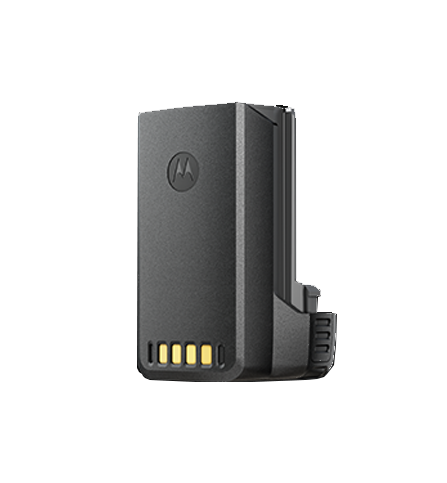
Options include a standard 2850 mAh battery and an optional 3200 mAh HAZLOC configuration.
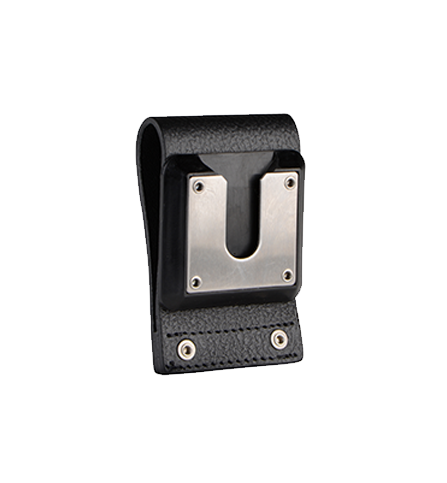
Belt clips, carry cases and retention accessories help keep the APX N50 secure and accessible
Motorola IMPRES™ battery technology supports intelligent charging, battery-health information and dependable performance across demanding shifts. Actual runtime depends on the selected battery, frequency band, transmit power, radio configuration and operating pattern.
| Motorola battery | Capacity | Digital runtime: VHF / UHF | Analogue runtime: VHF / UHF |
|---|---|---|---|
| PMNN4813 IMPRES 2 Li-ion | 2850 mAh | 26 / 25 hours | 19.5 / 19 hours |
| PMNN4815 IMPRES 2 Li-ion | 3200 mAh | 29 / 28 hours | 22 / 21.5 hours |
Battery figures are typical under Motorola’s 5/5/90 test profile at maximum transmitter power, with GNSS, Bluetooth®, Wi-Fi and option-board applications disabled. Actual operating time will vary.
The Motorola APX N50 can be configured with genuine Motorola accessories selected to meet operational, environmental and user requirements. Compatible batteries, chargers, audio accessories, antennas and carrying solutions help organisations deploy radios suited to their P25 communications environment.
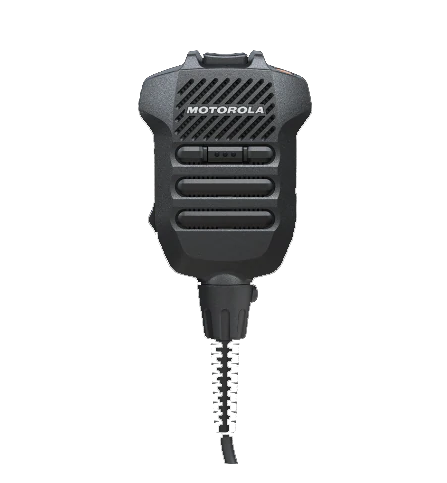
Compatible Motorola IMPRES remote speaker microphones allow users to transmit and receive communications without removing the APX N50 from their belt or carrying equipment. Available options include microphones designed for demanding operational conditions, with features varying by model.
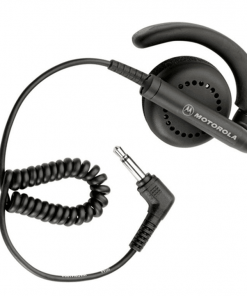
Motorola surveillance earpieces and compatible headsets support discreet communications, hands-free operation and communication in noisy environments. Accessory selection should consider PPE compatibility, hearing protection requirements and the radio’s accessory connection.
Motorola IMPRES 2 batteries and compatible charging equipment support reliable power management for individual radios and larger fleets. Available options include the standard 2850 mAh battery, optional 3200 mAh battery, single-unit chargers and multi-unit charging solutions.
Compatible Motorola belt clips, leather carry cases and retention accessories help keep the APX N50 secure and accessible during operational shifts. The appropriate carrying solution depends on the user’s clothing, PPE and operational requirements.
Motorola APX N50 antennas must match the radio’s VHF, UHF or 700/800 MHz frequency-band configuration. Compatible Bluetooth audio accessories may also support wireless communications, depending on the selected accessory and radio configuration.
MiningTelecoms Australia can assist customers with selecting compatible APX N50 batteries, chargers, antennas, audio accessories and carrying solutions as part of a complete P25 radio quotation.
MiningTelecoms can supply the Motorola N50 as a complete operational package incorporating the correct battery, charger, antenna, audio accessory and carry solution. Radios can be professionally programmed and labelled before dispatch.
Access official Motorola R7 product information, specifications, operating instructions and compatible accessory options. Contact MiningTelecoms if you need assistance selecting or configuring an R7 radio fleet.
Can’t find the technical information you need? MiningTelecoms Australia can assist with Motorola APX N50 frequency-band selection, P25 network compatibility, software feature options, accessories and deployment requirements.
Contact our team to discuss your APX N50 requirements and request a tailored quotation.
ASK ABOUT THE MOTOROLA APX N50Professional programming and network compatibility are essential when deploying Motorola APX N50 portable radios. MiningTelecoms Australia supplies APX N50 P25 radios configured around each organisation’s operational requirements, including licensed frequencies, channels, talkgroups, user roles, emergency procedures and supported network features.
Whether adding radios to an existing P25 system or planning a new deployment, our team can assist with identifying programming requirements, software feature licences and the necessary network authorisations.
Where the required programming information, software access and system permissions are available, radio configuration and deployment arrangements can be coordinated to help customers receive radios ready for their intended operations.
Radios can arrive labelled, programmed and ready for deployment rather than requiring customers to configure generic out-of-box equipment.
The Motorola APX N50 supports APCO P25 Phase 1 FDMA and Phase 2 TDMA communications across compatible conventional and trunked radio systems. Programming requirements depend on the selected frequency band, network architecture and enabled software features.
Programming and configuration may include:
Configuration is subject to the radio’s software feature entitlements, available programming tools and applicable network operator requirements.
Emergency communications are a critical consideration for public safety, government, utilities and industrial organisations operating P25 networks.
The Motorola APX N50 supports configurable emergency capabilities, with additional safety features available depending on the radio configuration and supported network functionality.
Requirements may include:
Emergency functions should be validated with the relevant network operator and tested against the organisation’s documented operational and emergency-response procedures before deployment.
Organisations introducing Motorola APX N50 radios into an existing P25 fleet must ensure that the new radios are compatible with the network’s frequency band, operating mode, system configuration and security requirements.
MiningTelecoms Australia can assist customers with assessing integration requirements involving existing Motorola APX radios and other compatible P25 equipment, including supported third-party radios.
Integration considerations include:
Existing radio configurations may provide useful reference information, but APX N50 programming should be independently validated rather than assuming another radio model’s codeplug or feature configuration can be transferred directly.
Compatibility and interoperability testing should be completed before operational deployment.
The Motorola APX N50 is designed to operate across compatible APCO P25 conventional and trunked radio systems, including supported Motorola ASTRO 25 networks.
Depending on the selected radio configuration and network infrastructure, integration requirements may include:
MiningTelecoms Australia can assist customers in evaluating APX N50 network requirements, identifying suitable radio configurations and coordinating technical information with authorised network administrators or system integrators.
Access to existing government, public safety and privately operated P25 networks requires approval from the relevant network operator. Radio availability does not automatically provide access to those networks.
The Motorola APX N50 and Motorola APX NEXT are designed for mission-critical communications across compatible APCO P25 radio networks. Both support public safety and government operations, but they offer different approaches to radio functionality, connectivity and user experience.
The APX N50 combines dependable P25 voice communications, rugged construction and essential connectivity in a compact single-band portable radio. The APX NEXT offers a more advanced connected-radio platform, with an enhanced user interface and additional broadband-enabled capabilities.
For Australian organisations, selecting the appropriate radio depends on existing P25 network infrastructure, frequency-band requirements, operational workflows, software features and total deployment cost.
| Feature | Motorola APX N50 | Motorola APX NEXT |
|---|---|---|
| Radio technology | APCO P25 Phase 1 FDMA and Phase 2 TDMA | APCO P25 Phase 1 FDMA and Phase 2 TDMA |
| Frequency options | VHF 136–174 MHz; UHF 380–520 MHz; 700/800 MHz single-band variants | Single-band and multiband options, depending on model and market |
| P25 network support | Compatible P25 conventional and trunked networks | Compatible P25 conventional and trunked networks |
| Channel capacity | Up to 1,000 channels | Up to 3,000 channels |
| Display | 2.4-inch colour display, 240 × 320 pixels | 3.6-inch colour touchscreen and 1.2-inch top display |
| User interface | Traditional radio controls, keypad and colour display | Touchscreen, physical controls and advanced voice interaction |
| Audio performance | Advanced audio processing and noise suppression | Adaptive audio processing and dual microphones |
| Bluetooth | Bluetooth 4.2 Low Energy | Bluetooth 5.0 |
| Wi-Fi | Optional dual-band Wi-Fi, 2.4 GHz and 5 GHz | Dual-band Wi-Fi, 2.4 GHz and 5 GHz |
| Broadband connectivity | Optional Wi-Fi-based capabilities, subject to configuration | LTE connectivity and supported broadband applications, subject to availability |
| Location services | GPS and GLONASS | GNSS and supported location applications |
| Encryption | Optional AES-256 encryption | Optional AES-256 encryption |
| Environmental protection | IP68; immersion tested to 2 metres for 2 hours | IP68; immersion tested to 2 metres for 4 hours |
| Dimensions | 135 × 55 × 33 mm | Approximately 138 × 63 × 43 mm |
| Weight with battery | Approximately 370 g with standard battery, excluding antenna | Approximately 525 g, depending on configuration |
| Battery | 2850 mAh IMPRES 2 standard battery | 4400 mAh IMPRES 2 battery in referenced configuration |
| Radio management | Supported programming and optional radio-management capabilities | RadioCentral and supported SmartProgramming capabilities |
| Typical application | Mission-critical P25 voice communications and operational support | Advanced mission-critical communications and connected applications |
Specifications and features may vary according to the selected frequency band, radio model, battery configuration, software licences, regional availability and network compatibility. LTE and connected services require confirmation of availability and support in Australia. Weight figures are based on the referenced configurations and may not be directly comparable with different battery or accessory selections.
The Motorola APX N50 is well suited to organisations seeking dependable P25 voice communications without requiring the full connected-radio capabilities of the APX NEXT.
Its compact design, 2.4-inch colour display, rugged IP68 construction and support for P25 Phase 1 and Phase 2 make it a practical choice for public safety support personnel, government departments, utilities and organisations operating established P25 networks.
For customers primarily requiring reliable voice communications, emergency signalling and configurable security features, the APX N50 may offer a more straightforward deployment option.
For organisations requiring advanced connected-radio capabilities, larger touchscreen controls and additional operational applications, explore the Motorola APX NEXT P25 Portable Two-Way Radio to review its features, technical specifications and available configuration options.
The Motorola APX NEXT is designed for organisations requiring advanced mission-critical communications, enhanced user interaction and greater connectivity.
Its larger touchscreen, available multiband configurations, LTE capability and support for advanced connected applications distinguish it from the APX N50.
These capabilities may be valuable for frontline emergency responders and organisations seeking more sophisticated radio workflows, location services and connected operational applications.
Additional hardware capabilities, software subscriptions and network services should be evaluated against the organisation’s operational requirements and budget.
Yes. Motorola APX N50 and APX NEXT radios can operate on the same compatible P25 conventional or trunked network when correctly configured and authorised.
Both support APCO P25 Phase 1 FDMA and Phase 2 TDMA operation. However, interoperability depends on compatible frequency bands, system programming, talkgroup assignments, software features, encryption configuration and network operator approval.
Organisations can therefore consider different radio models for different user groups while maintaining a common P25 communications environment, subject to system compatibility and successful operational testing.
Accessory compatibility must be confirmed for each radio model. Batteries, chargers, remote speaker microphones, antennas and carrying solutions should not be assumed to be interchangeable simply because both radios belong to Motorola’s APX product family.
MiningTelecoms Australia can assist customers with identifying compatible accessories and planning mixed-model P25 radio deployments.
MiningTelecoms Australia can assist customers in comparing Motorola APX N50 and APX NEXT P25 portable radios, evaluating existing network compatibility and identifying suitable frequency bands, software licences, security features and accessories. Contact our team to discuss your requirements and request a tailored quotation.
The Motorola APX N50 is a single-band APCO P25 portable two-way radio designed for mission-critical communications across compatible conventional and trunked radio networks. Supporting P25 Phase 1 FDMA and Phase 2 TDMA operation, the APX N50 can be configured for authorised public safety, government, mining, utilities and critical infrastructure communications systems.
Before deploying an APX N50 on an existing P25 network, organisations must confirm frequency-band compatibility, system architecture, radio programming, software feature licences, encryption requirements and network operator authorisation.
| Network Feature | APX N50 Capability | Deployment Requirements |
|---|---|---|
| P25 Phase 1 FDMA | Supported | Compatible P25 Phase 1 system and radio configuration |
| P25 Phase 2 TDMA | Supported | Compatible Phase 2 trunked network and required feature configuration |
| P25 Conventional | Supported | Licensed frequencies, compatible channel settings and system parameters |
| P25 Trunked Networks | Supported | Compatible system, required feature entitlements and network authorisation |
| Motorola ASTRO 25 | Supported on compatible systems | System compatibility, provisioning and operator approval |
| Third-Party P25 Systems | Potential interoperability | Standards compatibility, network approval and interoperability testing |
| Analogue Conventional | Supported where configured | Compatible analogue channels and licensed frequencies |
| VHF Operation | 136–174 MHz model | Compatible VHF radio infrastructure and antenna |
| UHF Operation | 380–520 MHz model | Compatible UHF radio infrastructure and antenna |
| 700/800 MHz Operation | 700/800 MHz model | Supported frequency allocations and authorised network access |
| AES-256 Encryption | Optional | Compatible encryption configuration, software features and key management |
| P25 Authentication | Available where supported | Required feature configuration and compatible network authentication services |
| Emergency Signalling | Supported | Compatible emergency configuration and network or dispatch support |
| GPS and GLONASS | Integrated location capabilities | Compatible location-reporting applications and system configuration |
| SmartConnect over Wi-Fi | Optional, where available | Supported Wi-Fi, software entitlements and compatible network services |
APX N50 capabilities depend on the selected radio model, frequency band, software licences, regional availability and network infrastructure. Support for a radio standard does not automatically guarantee access to an existing trunked network. Network compatibility and authorisation must be confirmed before deployment.
APCO P25 Phase 1 uses Frequency Division Multiple Access (FDMA), typically providing one digital voice path within a 12.5 kHz radio channel. P25 Phase 2 introduces two-slot Time Division Multiple Access (TDMA) operation on compatible trunked systems, allowing two voice paths within a 12.5 kHz channel.
The Motorola APX N50 supports both P25 Phase 1 and Phase 2 operation, allowing organisations to select a configuration suited to their existing network infrastructure. Phase 2 operation requires compatible trunked network equipment and the appropriate radio configuration.
In a P25 conventional radio system, users communicate over assigned radio channels, either directly or through compatible repeaters. Conventional systems may be suitable for individual sites, local operational areas and organisations requiring straightforward radio communications.
P25 trunked systems dynamically allocate available radio channels to users and talkgroups. This allows compatible networks to support larger radio fleets, multiple user groups and more complex operational requirements.
The APX N50 can support both conventional and compatible trunked P25 systems. The appropriate frequency band, software features and system programming must be selected for the intended deployment.
The Motorola APX N50 is designed for compatible Motorola ASTRO 25 P25 communications networks, including supported Phase 1 and Phase 2 operation.
However, purchasing an APX N50 does not automatically provide access to an existing ASTRO 25 system. Trunked network operation may require specific software entitlements, authorised radio IDs, system provisioning, authentication credentials and approval from the network operator.
MiningTelecoms Australia can assist customers with identifying the APX N50 configuration required for their intended network and coordinating technical requirements with authorised system administrators or integrators.
The Motorola APX N50 and compatible Tait P25 radios use the APCO P25 digital radio standard, which is designed to support interoperability between compliant equipment from different manufacturers.
On a compatible P25 conventional system, radios from different manufacturers may communicate when the operating frequencies, channel parameters, talkgroup settings and encryption configurations are correctly aligned.
Interoperability on a P25 trunked network requires additional verification. Network-specific provisioning, supported features, authentication, encryption and system operator approval can affect whether different manufacturers’ radios can operate together.
MiningTelecoms Australia can assist organisations operating Motorola and Tait P25 equipment with assessing compatibility requirements and planning appropriate interoperability testing.
The Motorola APX N50 offers optional AES-256 encryption to support secure voice communications on appropriately configured P25 systems.
Encrypted interoperability requires compatible encryption algorithms, authorised key provisioning and matching operational security arrangements. P25 authentication and other security capabilities may also require specific software features and compatible network infrastructure.
Organisations should confirm encryption and authentication requirements with their network administrator before purchasing or deploying additional radios.
Australian organisations must select the correct APX N50 frequency-band variant for their licensed radio communications system. Available models include VHF 136–174 MHz, UHF 380–520 MHz and 700/800 MHz configurations.
Frequency compatibility alone does not guarantee that a radio can join an existing network. Organisations must also consider applicable ACMA licensing conditions, system configuration, network operator authorisation, software entitlements and any security or interoperability requirements.
For public safety and government networks, additional access controls and operational approval processes may apply.
MiningTelecoms Australia supplies Motorola APX N50 P25 portable radios to Australian government, public safety, mining, utilities and critical infrastructure customers.
Our team can assist with:
Planning to add Motorola APX N50 radios to an existing P25 network? Contact MiningTelecoms Australia to discuss your network requirements, confirm the appropriate radio configuration and request a tailored quotation.
The Motorola APX N50 is available with an optional 3200 mAh HAZLOC battery (PMNN4815). However, fitting a HAZLOC battery does not automatically make every APX N50 configuration suitable for use in a classified hazardous area.
Hazardous-location suitability must be verified against the complete approved radio, battery and accessory configuration, applicable certification standards and the site’s hazardous-area classification.
For Australian mining, oil and gas operations, customers should confirm the required IECEx, ATEX or other applicable approvals before deploying radios in potentially explosive atmospheres.
MiningTelecoms Australia can assist with identifying suitable radio options based on the site’s operating environment and certification requirements.